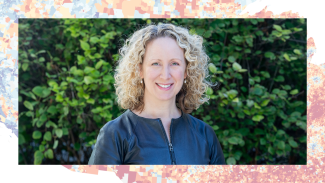
Amy Kind, MD, PhD, an international leader in health disparities research and leader of the Wisconsin Alzheimer’s Disease Research Center’s (ADRC) Care Research Core, is directing The Neighborhoods Study, which has received a $30.9 million award, making it UW–Madison's third-largest active National Institutes of Health (NIH) grant.
The project is the largest study of its kind, bringing together 24 National Institute on Aging (NIA)-designated Alzheimer’s Disease Research Centers across the United States to examine how environmental and social factors, including poverty, unemployment, education, environmental toxins and housing quality, influence the risk of Alzheimer's disease and related dementias (ADRD) across the lifespan.
Kind and her team previously found an association between neighborhood disadvantage and the presence of Alzheimer’s disease-related brain changes identified during an autopsy. The findings showed that people living in the most disadvantaged neighborhoods had about twice the odds of these brain changes compared with those living in the most affluent neighborhoods.
“Study linking environmental factors and Alzheimer’s disease awarded NIH funding” was published by the University of Wisconsin School of Medicine and Public Health on August 26, 2026.
Related
“UW research study on Alzheimer’s receives second round of funding” appeared on WMTV15 News on August 26, 2026.
“How do your environment and life experiences shape dementia risk?” appeared on the UC Davis Health website on August 26, 2026.
"Healing the World, Block by Block" was published in the Spring 2026 issue of On Wisconsin.
“Milwaukee to use Dr. Amy Kind’s research to coordinate lead service line replacement across city” appeared on our website on June 29, 2023.
“Federal Agency uses Dr. Amy Kind's Research to Shape National Health Policy” appeared on our website on March 31, 2023.
“Kind lab research featured in article about geographical hot spots for Alzheimer's disease” appeared on our website on November 19, 2020.
Listen to "Neighborhoods and Neurons: Study Finds Association between Neighborhood Disadvantage and Alzheimer’s Disease-related Brain Changes," published on the Dementia Matters podcast on August 6, 2020.
Updated 8/28/2026, 9/1/2026.